
Finding People Through Hudson Records
Hudson does not maintain one public roll of everyone who lives in the city. The dependable route begins by separating a present property question from a historic household question. Summit County property records are useful when an address or parcel is known. The Recording Division keeps recorded instruments. Hudson's municipal archive can establish the date and agency behind a City document. Older households belong in directory, map, newspaper, tax, and archive research. Each source has its own purpose, and a result should retain the custodian and date that produced it.
A name alone can produce similar matches. Start with the most stable fact, such as a complete address, a parcel number, a date range, or the particular record sought. Then compare only sources that cover that time and question. A property display is not the same as a deed, and a dated directory entry is not a claim about a person's present location.
- Use the Summit Fiscal property route to locate an address or parcel record.
- Confirm its geographic position in the County Parcel Viewer.
- For a transfer question, contact the Recording Division or its official index landing page for the actual instrument.
- For a past household, compare the relevant directory year, map, newspaper, and archival sources.
- When an existing City or court record is not online, make a focused request to the responsible custodian.
Note: A no-result can reflect date coverage, spelling, jurisdiction, redaction, or an unavailable interface rather than a definitive absence.
Hudson Custodians Behind Resident Records
Choose the office by record class. Hudson's Communications Office routes municipal requests, but the City explicitly sends deed, tax, birth, death, marriage, and court questions to county or state custodians. The Summit Fiscal Office separates property assessment access from recorded documents. The Clerk controls Common Pleas and Appeals materials, while Probate has its own historic and marriage routes. This distinction keeps a focused request from being sent to the wrong counter.
Summit Recording Division
Ohio Building, 175 S. Main St., 4th Floor
Akron, OH 44308
330-643-2712
Summit Fiscal Property Access
Fiscal Office, 175 S. Main St.
Akron, OH 44308
County property and tax route
Hudson Communications Office
1140 Terex Road
Hudson, OH 44236
330-342-9539
The Hudson Public Records page explains the City channel and directs county-held subjects elsewhere. Its routing is the best first check before requesting a municipal file.
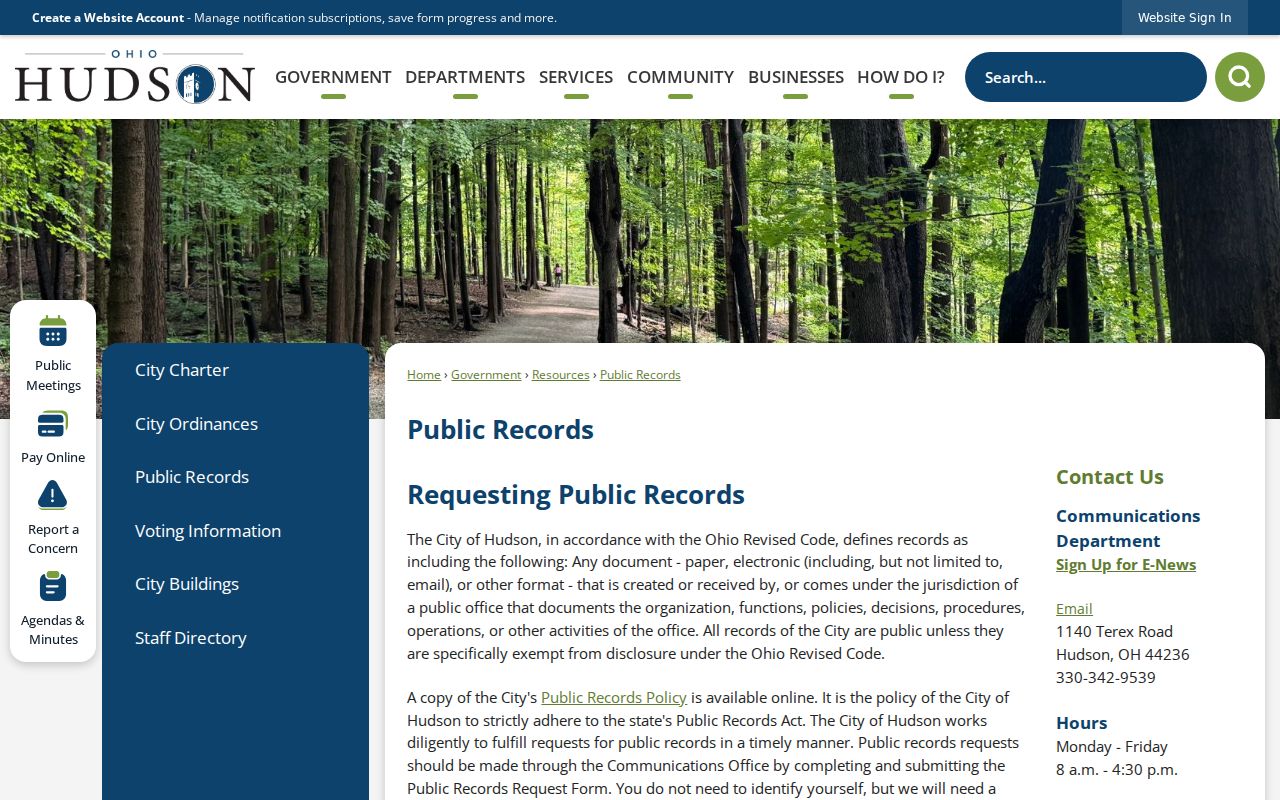
The published City route helps distinguish a City document from land, vital, or court material that another custodian holds.
Hudson Property Search Starts With a Parcel
Summit Fiscal Office Public Access is the county entry point for a current real-property or tax question. Its official instructions document fields for parcel, route, owner, address number, street, ZIP, and tax year. They also identify basic and advanced search paths, sorting, and a page-size control. The portal published a nightly update note, so a very recent change may not appear right away. The live system showed maintenance during research, making the guide the safer source for its documented fields.
| Hudson property field | How it helps | Research caution |
|---|---|---|
| Address No and Street | Find a candidate parcel from a known address. | Keep directional and street-type differences in view. |
| Parcel | Connect a property query to map and document research. | Parcels can change through splits or combinations. |
| Owner and ZIP | Narrow a county property query. | Neither is a complete identity or postal record. |
| Tax Year | Place an assessment result in time. | Assessment, title, and occupancy are different facts. |
Use the official Public Access instructions for spelling and wildcard guidance. The guide advises no quotation marks and shows limited wildcard examples, which is more reliable than guessing how the current interface handles a broad search.
A Summit property-search screen shows the official access choice before a query begins.
That entry point is useful for parcel research, not for turning an owner field into a complete list of Hudson residents.
Map Hudson Parcels With County Context
The Summit County Parcel Viewer accepts a parcel number, owner name, or street address in one combined search. Its role is spatial: it helps compare a parcel to a street and nearby parcel outlines, or resolve two similar address results. The County describes the map as informational, so it is not a legal survey, title opinion, or automated roster of the people around a parcel. For municipal orientation, Hudson also links its own mapping resources and an archived City street index.
- Parcel
- A County property unit used for tax and map work. It may change over time.
- Recorded instrument
- A filed document, such as a deed, transfer, mortgage, or lien, kept separately from the map.
- Index
- A finding aid that points to records. It is not automatically the complete underlying record.
- Criss-cross directory
- A historical directory arranged by address rather than only by name.
The Hudson maps gateway provides local map links, while the County viewer supplies current parcel context. Keep the source and map date beside any observation drawn from either.
Hudson's official maps page is a useful municipal orientation source.
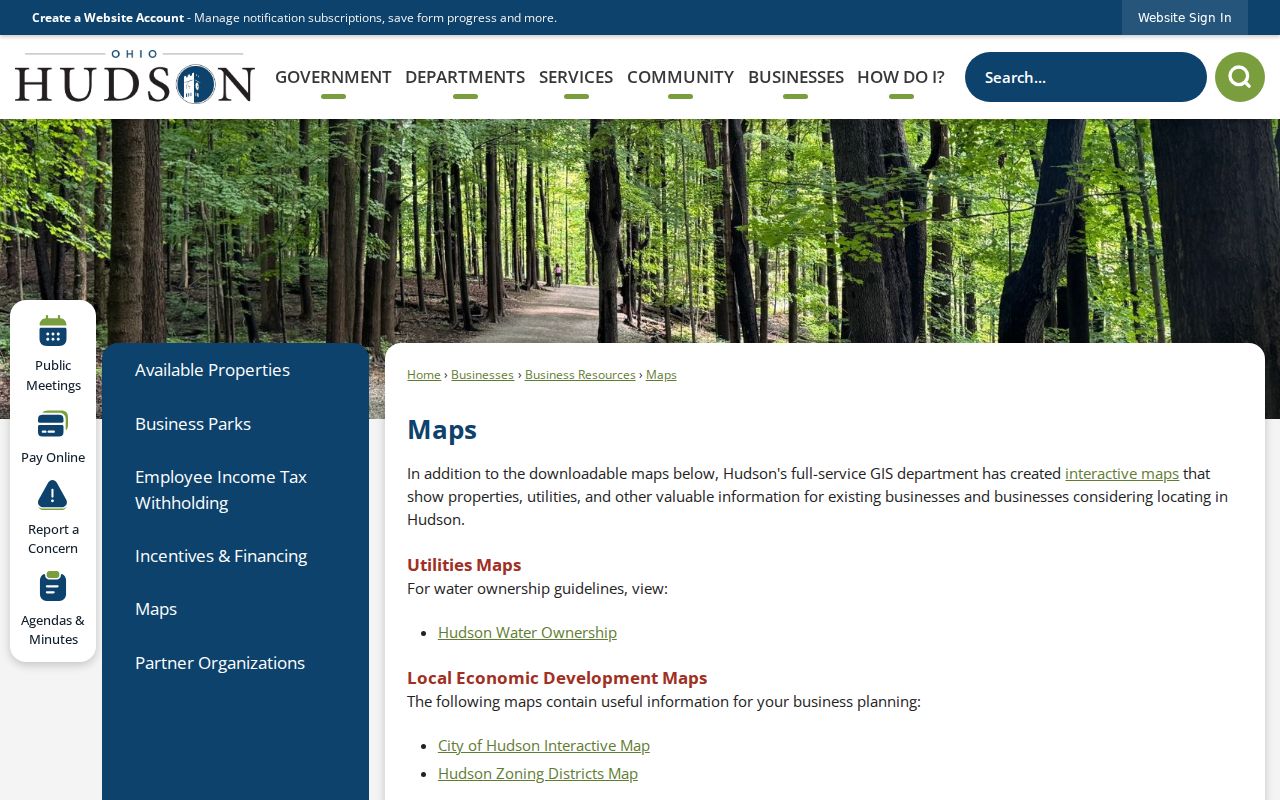
City map resources complement, but do not replace, the County parcel record or an official postal check.
Current Hudson Sources for Resident Research
Current sources each answer a limited question. The county property system can identify a parcel and assessment context. The Ohio voter lookup is designed to check registration, precinct, and polling-place information. The Recording Division can point to a recorded transaction. Hudson's staff directory only identifies municipal contacts, not residents. Treating these separate systems as one directory would lose the limits that make each result meaningful.
| Hudson source | What it can establish | Custodian | Access path |
|---|---|---|---|
| Fiscal property record | Parcel and tax-assessment context. | Summit Fiscal Office | Public Access and its field guide. |
| Voter-registration lookup | Registration, precinct, and polling-place utility. | Ohio Secretary of State | First name, last name, and Summit County. |
| Recorded-document route | Document location and recorded-instrument context. | Summit Recording Division | Official index landing page or counter. |
| City Archive | Dated municipal documents and agency context. | City of Hudson | Keyword, collection, time period, and date range. |
A Hudson resident lookup works best when its source label stays attached to the result. The Resident Lookup workflow explains how to keep a parcel, document, archive item, and court record distinct when checking one specific question.
Ohio Voter Tools Have Defined Boundaries
Ohio's Voter Search requires first name, last name, and county. For Hudson, choose Summit. It is meant for registration, precinct, and polling-place checks. The separate voter-data portal provides dated downloadable snapshots with election, date-range, and county controls. It reports a maximum seven-day date range and at least 22 months of snapshot retention. Those are election-data tools, not an evergreen address directory.
Ohio Revised Code 3503.13 excludes sensitive fields from public voter releases, including Social Security, driver-license or state-ID, telephone, email, protected program, and certain protected-address information. A result or non-result should never be used to infer those fields or a confidential location.
Hudson Deed Trails Require the Recording Division
The Summit County Fiscal Office, Recording Division indexes real-estate sales, leases, transfers, mortgages, liens, and other recorded instruments. Its current index landing page did not expose search controls during research, so the page does not promise unverified name, date, or document-type filters. For a known instrument, use the official landing page, call the division, or visit the fourth-floor counter. The office says all its records except military documents are public.
Copies remain a practical fallback. The division publishes basic copies at $2 per page plus $1 for certification and asks mail requesters to include a self-addressed stamped envelope. A request is strongest when it gives known recording, parcel, property-description, or party information rather than asking staff to build a broad history.
Note: An assessment entry, a deed, a mortgage, and a map label are separate record classes that can carry different dates and meanings.
Hudson City Archive Holds Dated Civic Records
Hudson's City Archive is a municipal document index, not a resident list. Its keyword, archive, time-period, and date-range controls reach Council, planning, Architectural and Historic Board of Review, zoning, cemetery, map, and Records Commission material. A street name or address can provide the context for a City decision when paired with the document type, agency, and date. It does not by itself establish ownership, present residence, or a private relationship.
The Hudson City Archive search provides the official collection and date controls.
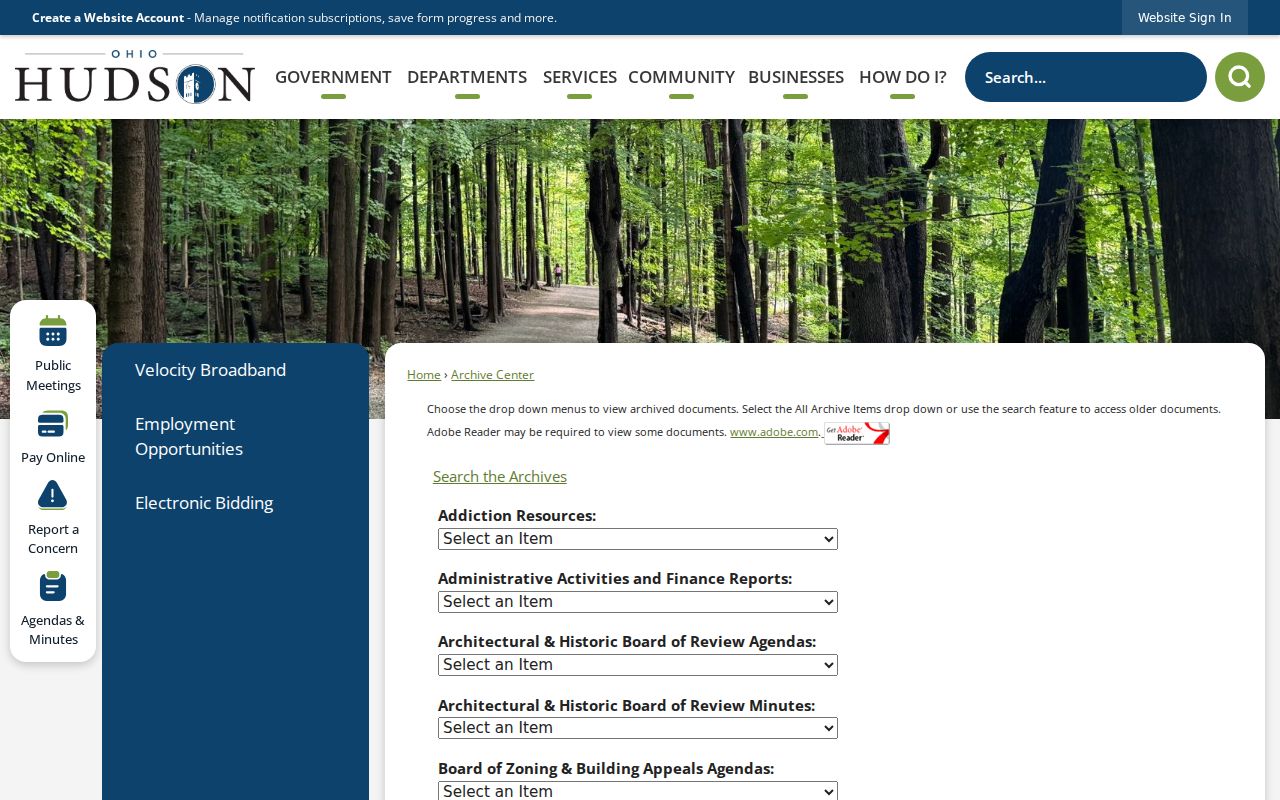
Its collection filters make a narrow municipal question easier to document without treating a document mention as an identity claim.
Hudson Court and Vital Routes Stay Separate
Hudson has no standalone municipal court. Stow Municipal Court serves Hudson for its stated jurisdiction, Common Pleas and Appeals material begins with the Summit Clerk's division selector, and Probate has separate historic and marriage resources. The Clerk separates Civil, Criminal, Domestic, and Appeals. Its published computerized coverage begins in 1990 for Civil, 1986 for Criminal, 1989 for Domestic, and in 1990 for the Appeals index, with full Appeals dockets beginning in 1999. Older material may need the records-request route.
For vital records, Summit County Public Health handles certified Ohio births, Ohio deaths, and Summit County fetal deaths from December 1908 to the present under its published rules. Probate holds older local categories within stated ranges. A certified record is not an open name-search substitute, and recent death-record Social Security information has added restrictions.
The Summit Clerk division selector is the official place to choose a County court route.
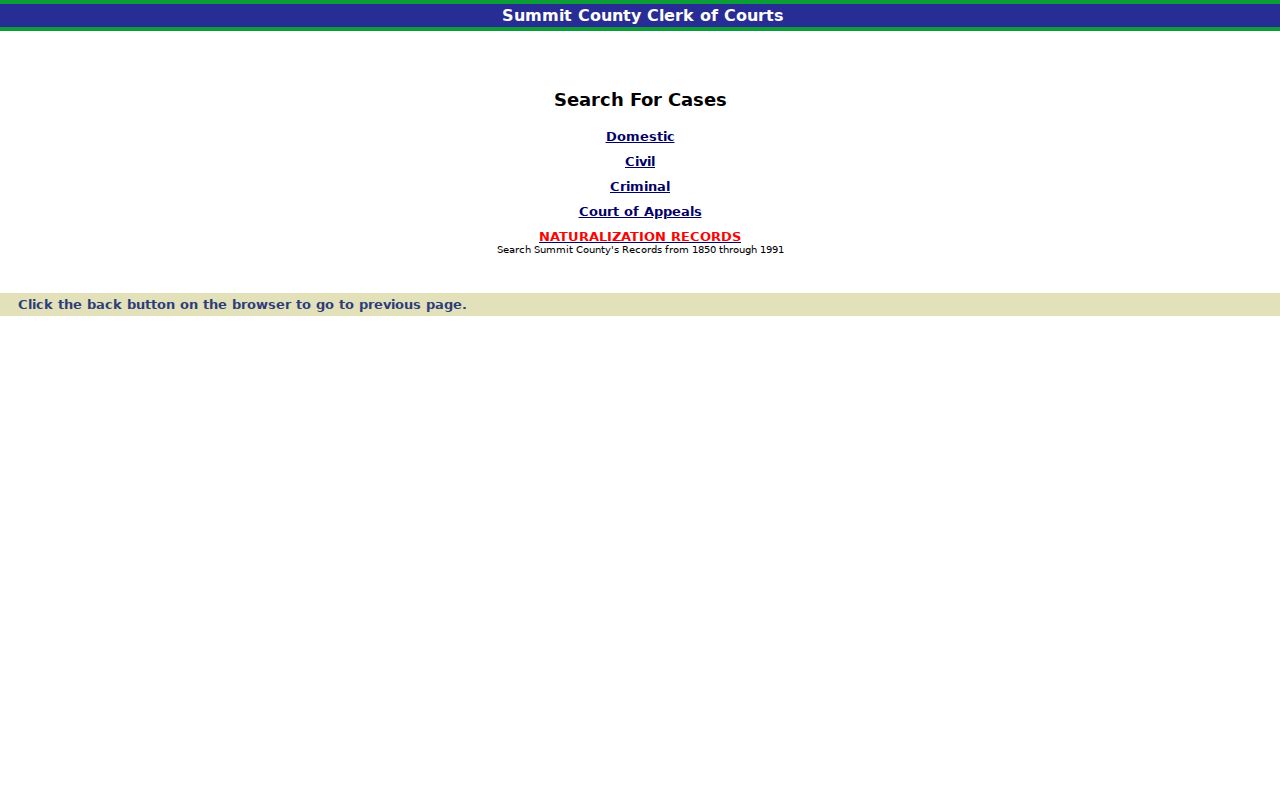
Choosing the proper division and date range makes an empty online result easier to interpret and points older requests to the correct custodian.
Hudson Privacy Rules Matter Before a Search
Ohio's Public Records Act, R.C. 149.43, supplies an access baseline, but it does not erase exemptions or specialized confidentiality rules. The law supports prompt inspection of public portions and identifies redaction where exempt material is withheld. It does not require an office to create a new compilation, answer a questionnaire, or disclose protected data. A request for a known final record over a defined date range is usually more useful than a broad request about a person.
Safe at Home, sealing and expungement, motor-vehicle confidentiality, vital-record limits, and voter redactions each set a separate boundary. When an entry is missing, redacted, or contradictory, keep the date and source and ask the custodian about its record process. Do not treat an absence as evidence of a person's current situation.
Hudson Records Requests Work Best When Specific
Ohio's Public Records Act allows a person to request an existing public record without giving a name, making the request in writing, or explaining a purpose. An office may ask for those details only after saying they are optional and may help identify material. The law also does not require a public office to create a new analysis or compile a new directory just because individual records might contain related facts. Ask for the record that already exists.
For City-held material, a useful Hudson request identifies the department, subject, date range, and desired medium. A request for final Council agenda packets mentioning a street over a stated period is easier to locate than a request for every item about a person. Hudson lists its Communications Office as the City channel and separately provides a Police Records contact for a known report. County court, land, property, marriage, birth, and death requests should begin with their respective custodian rather than the City.
If a record mixes public and exempt material, Ohio law requires the nonexempt portion to be made available and the redaction to be identified or visibly marked. That procedure protects private fields while leaving the appropriate public record accessible.
Historical Hudson Directory and Archive Trails
Hudson Library & Historical Society keeps a rich local path for dated household and address questions. The house-research guide directs researchers from a current parcel backward through recorded instruments, tax material, maps, directories, newspapers, house reports, and manuscript collections. It specifically notes 1910 and 1950 address directories in the reading room. Those volumes are evidence for the edition year, not proof of a current residence.
The Historical Society is at 96 Library Street, and its house guide gives an appointments contact. The library's genealogy route adds on-site research resources, while the newspaper collection reports a virtually complete local run from 1828 to present and a local index from 1903 forward. The full collection methods appear on the Hudson City Directories page.
Great Lots Explain Older Hudson Descriptions
Hudson's past cannot always be searched under a modern street number. The local house guide describes Western Reserve Range 10, Town 4, and the original 100 Great Lots. Older records may use a Great Lot, block, sublot, or directional description. Hudson was in Trumbull County from 1799 to 1807, Portage County from 1807 to 1840, and Summit County from March 3, 1840 forward. That date check can change the correct archive or county path.
Historic maps from 1855, 1878, and 1891, plus the 1916 Sanborn map, are time-specific research aids. Preserve the wording used in the deed or map. The research does not support a Citywide address-renumbering converter or an automatic match between an old Great Lot and a present parcel.
Hudson Newspapers and Cemeteries Add Context
Hudson newspapers, historical house material, directories, cemetery resources, and the federal 1950 census can strengthen a dated local-history trail. Record the title, publication date, page, collection, and image or document link for every finding. Hudson's five municipal cemeteries are a city-held location resource, but its online cemetery name-search feature was still under construction during research. Contact Public Works for burial-location help rather than assuming an online name index exists.
These sources can explain a family-history or house-history question. They should not be blended into a current profile or used to turn a historical mention into present-day contact information.
Note: Census, directory, cemetery, and newspaper evidence should retain its original date, repository, and stated limitations.
Official Hudson Links Reduce Search Scams
Start paid or sensitive requests from a custodian's official domain, compare a charge with its posted form or fee schedule, and call the number shown on that official page when a message seems urgent. The Summit Clerk has warned about a look-alike site impersonating its service. The Ohio Secretary of State similarly advises checking an official record before responding to an official-looking business message or payment demand.
For City records, begin with Hudson's published public-records channel. For land documents, start at the Summit Recording Division. For vital certificates, use the Public Health order page. This simple route prevents an unofficial link from becoming the starting point for a payment or sensitive document request.