
Hudson City Directory Holdings
Hudson’s historical collections are strongest when treated as a shelf of related evidence rather than one continuous directory run. The Hudson Library & Historical Society keeps city directories in its reading room and specifically identifies 1910 and 1950 volumes organized by address. Tax microfiche, newspapers, maps, and digital house materials fill different parts of the local record. Each entry needs its own collection name, edition or coverage date, repository, and access route.
| Collection | Years | Where held | Access |
|---|---|---|---|
| Hudson address directories | 1910 and 1950 identified | Hudson Library & Historical Society reading room | Archive research and appointments |
| Auditor tax microfiche | 1808–1939 | Hudson Library | Local archival research; originals remain with the Fiscal Office |
| Telephone-directory holdings | 1914 forward | Akron-Summit County Public Library collection | Historic-directory research route |
| Hudson newspaper index | 1903–present | Hudson Library genealogy resources | Index followed by the cited paper source |
| Hudson newspaper holdings | 1828–present | Hudson Historical Society and library | Microfilm and selected digitized runs |
These are not interchangeable collections. A directory can give a dated name-and-address lead, tax microfiche can add an assessment clue, and a newspaper can identify a date or event to verify. Gaps between editions should remain gaps until another dated source supports the connection.
Hudson City Directory Shelf
The Hudson Library genealogy collection supplies the main local starting point for city-directory research. It points researchers to historical directories, a local newspaper index, Ohio Memory, PERSI, family and local-history books, and on-site Ancestry Library Edition. The Hudson Historical Society research collection is at 96 Library Street. Its house-research guide gives extension 1043 and an appointment route through historical.society@hudson.lib.oh.us.
For a historic address, the Library and Historical Society recommend working latest to oldest: establish the current parcel and legal context, check recorded instruments and tax references, then compare maps, city directories, newspapers, house reports, photographs, and manuscripts. That sequence prevents a familiar name or appealing photograph from being attached to the wrong property. It also gives each Hudson city directory entry a place in a documented chain rather than treating it as stand-alone proof.
Visit the Hudson Library genealogy resources for the collection and research-service entry point.
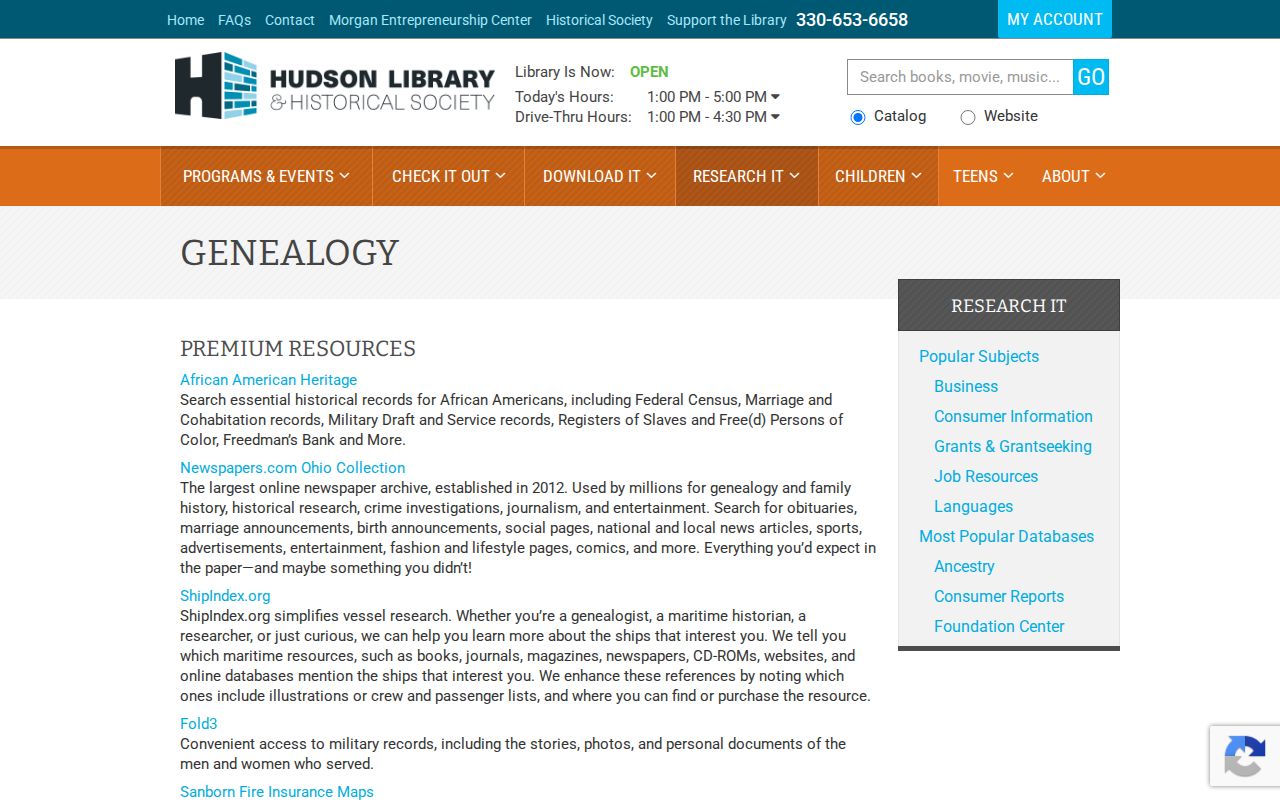
The library route connects printed directory work to local newspapers, archival material, and the historical questions that a modern county search cannot resolve alone.
Read Hudson City Directory Entries
A historic city directory has to be read on its own terms. The Akron-Summit County Public Library’s directory guide says resident listings generally include a name, occupation, and spouse, while street sections list residents and businesses by address. Hudson’s 1910 and 1950 volumes are described as address-organized property listings. Verify which kind of section is in front of you before copying an entry into notes.
| Name | A published personal or business name in that edition. |
|---|---|
| Occupation and spouse | Fields generally found in historical resident listings, not guaranteed in every volume. |
| Street address | An address in a name listing or an address-ordered street section, tied to the edition date. |
| Business listing | A business name or address that may appear in the street section. |
| Edition details | The year, publisher or collection label, page, and original abbreviation marks needed to cite the entry. |
- Criss-cross directory
- An address-ordered section that can place published residents or businesses along a street for that edition.
- Householder index
- A name-ordered reference to a listed household where the particular volume supplies one; verify the volume’s own arrangement.
- Abbreviation key
- The legend or shorthand guide printed in a directory volume. Consult it before expanding an abbreviated entry.
Record the exact page, edition year, and section type. A street-section line is dated directory evidence. It does not establish who occupies the address now, who held legal title, or the identity of every person associated with the location.
Hudson Directory Timeframe
Hudson’s record geography changes with the date. Local history begins in the Western Reserve, and the place was tied to different counties before Summit County became the correct county route. That history matters when a city directory entry points backward to a deed, probate file, map, or tax record. A present-day Hudson or Summit label should not be projected onto an older record without checking the period.
- 1799–1807: Hudson was in Trumbull County, so early land and court research can require a Trumbull-era path.
- 1807–1840: Hudson was in Portage County, which changes the county context for an event in that period.
- 1808–1939: Hudson Library’s auditor tax microfiche supplies a local assessment-related collection.
- March 3, 1840–present: Summit County is the county path for property, court, probate, and fiscal records as the record type requires.
- 1903–present: Hudson Library’s newspaper index provides a dated local discovery route.
Historic maps extend the timeline. The Historical Society identifies 1855, 1878, and 1891 maps, while the Library of Congress holds a 1916 Sanborn map. The 1950 federal census is also publicly searchable through the National Archives, but it remains historical evidence rather than a current directory.
Hudson City Archive Search
The Hudson City Archive is a companion source for the documents surrounding a dated directory entry. Its search controls include keyword, archive, time period, and date range. The collections include City Council, Architectural and Historic Board of Review, zoning appeals, planning, cemetery material, maps, and records commission documents. A street or property term can locate public decision records that explain municipal context.
The archive is not a current resident roster and should not be used as one. Retain the document’s title, date, agency, and attachment context. When the question concerns a City-held document not found online, Hudson’s public-records channel routes focused requests through the Communications Office. County deeds, property tax, marriage, vital, and court records belong with their designated county custodians instead.
Note: An archive reference is strongest when its date and issuing agency stay with the related directory or map citation.
Hudson City Directory Newspapers
Newspapers add a dated local index beside the Hudson city directory shelf. Hudson Library’s genealogy materials identify an index from 1903 to the present and name publications including the Hudson Herald, Hudson Hub, Hudson Times, Hudson Observer, Hudson Life, and the North Summit Times/Independent. The Historical Society reports a virtually complete Hudson newspaper run from 1828 to the present, with full text on microfilm and selected digitized runs.
Use a newspaper item to identify a title, publication date, page, headline, and exact text or image. Editorial material and official notice material are not the same kind of evidence. A directory listing can suggest a name or address to investigate, while a contemporaneous government record is the better confirmation for a legal event. The long newspaper run is especially useful where city-directory editions leave a gap, but it does not prove continuity by itself.
Hudson History in Digital Collections
Hudson Memory’s digital collections add photographs and the Houses of Hudson collection to city-directory research. The historical house guide describes more than 500 local house resources, and the digital-collections page describes 585 Houses of Hudson images. A house report can include past-owner genealogy, deed and tax research, photographs, inspection material, and architectural information, but those details stay tied to the report’s date and cited sources.
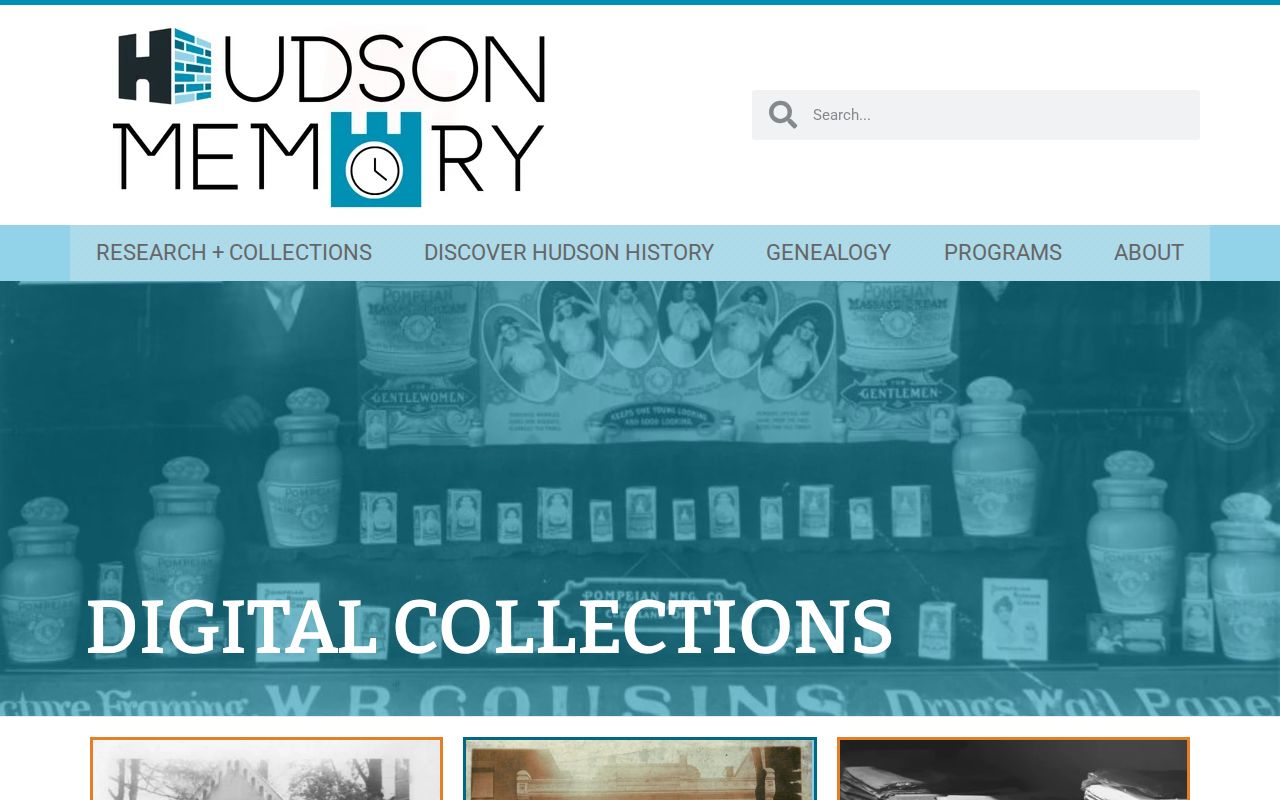
Digital items make useful leads for a Hudson address or family question. They need confirmation against primary recorded instruments, tax material, or the dated city directory entry before extending a property history.
Hudson Directory Cemetery Route
Hudson’s municipal cemeteries can help close a historical timeline after a directory or newspaper search. The City lists Draper, Markillie, St. Mary, Old Hudson Township Burying Ground, and O’Brien cemeteries. Its page directs burial-location questions to Public Works and states that the locations are open from dawn to dusk. The interactive cemetery map’s name-search function was still under construction during research.
See the City of Hudson cemetery resource for the official locations and contact route.
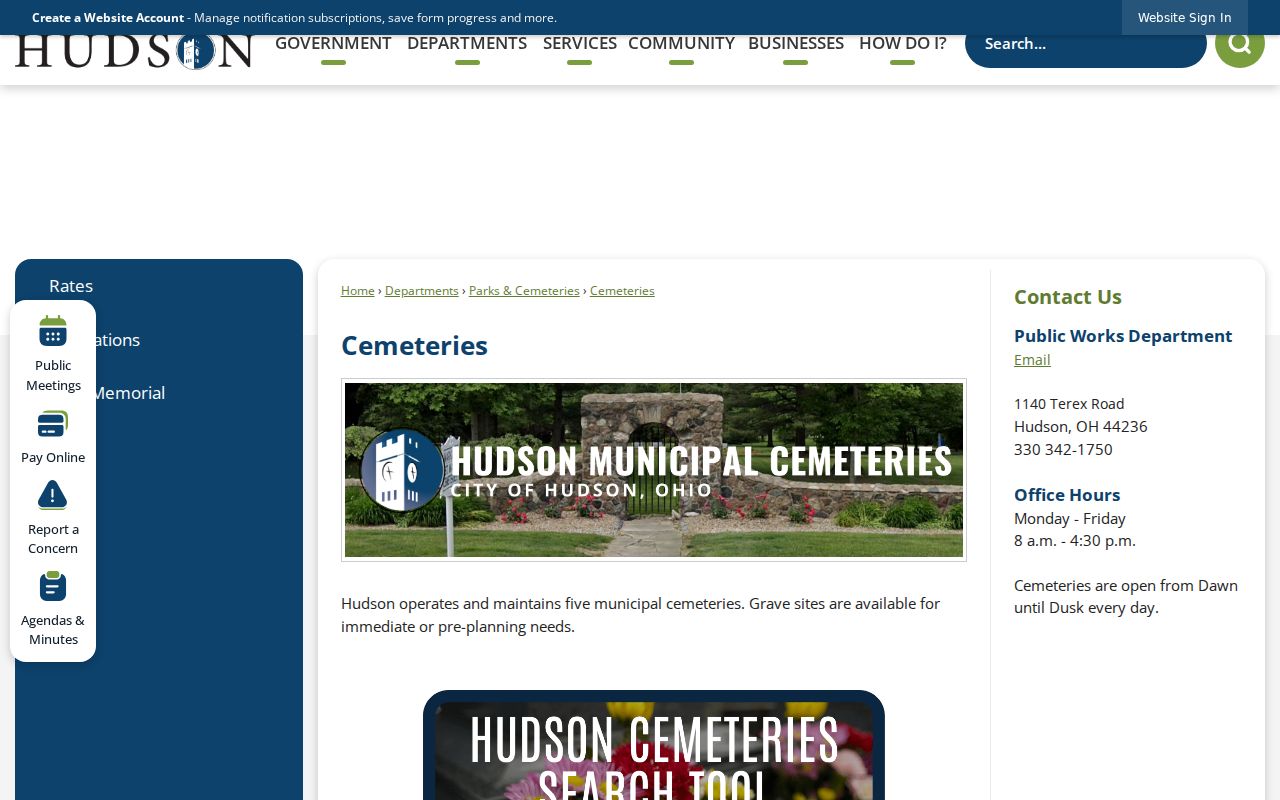
Use a cemetery source with an obituary, newspaper citation, or archive document, and retain the source date. A public cemetery location is not a verified online burial-name index.
Trace Hudson City Directories
Follow one household through city directories with dated notes, not assumptions. Begin with an identified edition and copy the name spelling, address, section type, page, and any visible abbreviations. Then compare the next available directory or source. A gap, an address change, or a missing listing can have several explanations, including a move, a changed spelling, a changed collection practice, or simple omission.
- Locate the first reliable Hudson city directory entry and save the edition year and page.
- Check the nearest earlier and later directory or address listing for a matching name or street.
- Compare the address with the historic map and, where relevant, the tax or recorded-document trail for that period.
- Pair a directory decade with the relevant federal census period, keeping the census as historical evidence only.
- Use the local newspaper index, cemetery route, probate guidance, or a house report to test a date-specific question.
For a modern parcel or recorded-document question that grows out of the historical trace, use the Hudson street directory route to separate the current county property record from older directory evidence. The historical collection and the modern county record serve different dates and purposes.
Hudson City Directory Boundaries
City directories, newspapers, maps, and house reports can reveal a great deal about a particular period. They cannot fill every gap. The 1890 federal census was largely destroyed, which makes local directories and other sources more useful for that era but does not turn them into a continuous census. Hudson’s historic Great Lot descriptions may also differ from a modern street number. Preserve both forms until a dated source demonstrates the connection.
Ohio public-records boundaries remain in force even during historical research. Safe at Home can substitute an eligible participant’s address in specified public-record settings, and a missing address must not be reconstructed from scattered sources. Court materials can be sealed or redacted, and modern vital records have separate rules. Use the responsible custodian when a source is unavailable, restricted, or needs correction.